You understand the menu. You can choose the correct line on a screen. Then someone needs a reply from you (a note to a landlord, a message to a colleague, a line at the door) and the words will not come.
That gap is familiar to serious learners. Recognizing a sentence and retrieving one are different jobs. A tap mostly trains the first. Practice that asks your memory to produce the line trains the second.
Peekle is built for people who want that second skill: usable language in real situations, not streak theater.
Why a correct tap can still leave you stuck
Multiple choice is kind. The right phrase is already on the screen. Your eye finds it. You select it. It feels like progress.
Often it is only familiarity. You have seen the shape of the sentence. You have not had to reach for it with an empty field and a job to finish.
When a later moment asks you to say or write something (no list, no four options) the comfort disappears. You understand more than you can produce. That is not a personal failure. It is what recognition-heavy practice predicts.
Active recall is the practice that sticks
Learning research has a plain name for the harder move: active recall (also called retrieval practice). Trying to pull a word or a phrase out of memory, even when it is awkward, strengthens the path you will need later. Useful difficulty is not busywork; it is the point.
So when a real situation needs a line from you, the useful drill is not only “find the answer.” It is “build the answer from what you remember.”
Chunks help. You do not need every word in isolation. You need the line you would actually send: the tone you want, the pieces that fit, the sentence that does the job.
Honest help beats fake independence
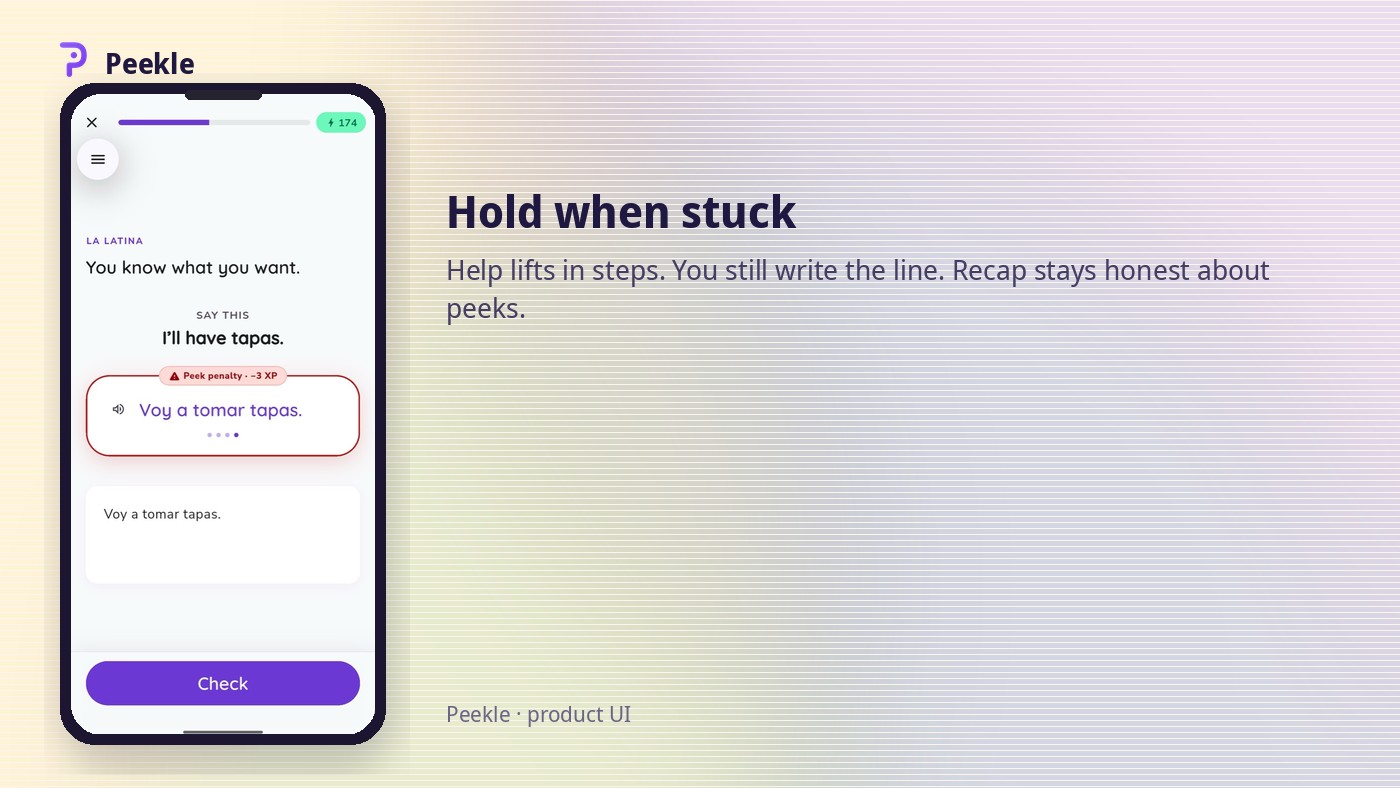
Serious learning still needs scaffolding. Help should be available, graded, and honest: not hidden behind shame, and not pretending you did the hard part alone.
In Peekle you can hold a line to see it in your language, then let go and produce it yourself. If you are stuck, help can lift in steps: a hint, then pieces, then the model. Your recap keeps an honest record of peeks and help. The goal is finishing the moment with real practice, not perfect unaided performance on day one.
That is different from never leaving the comfort of a tap.
Memory works better with a scene
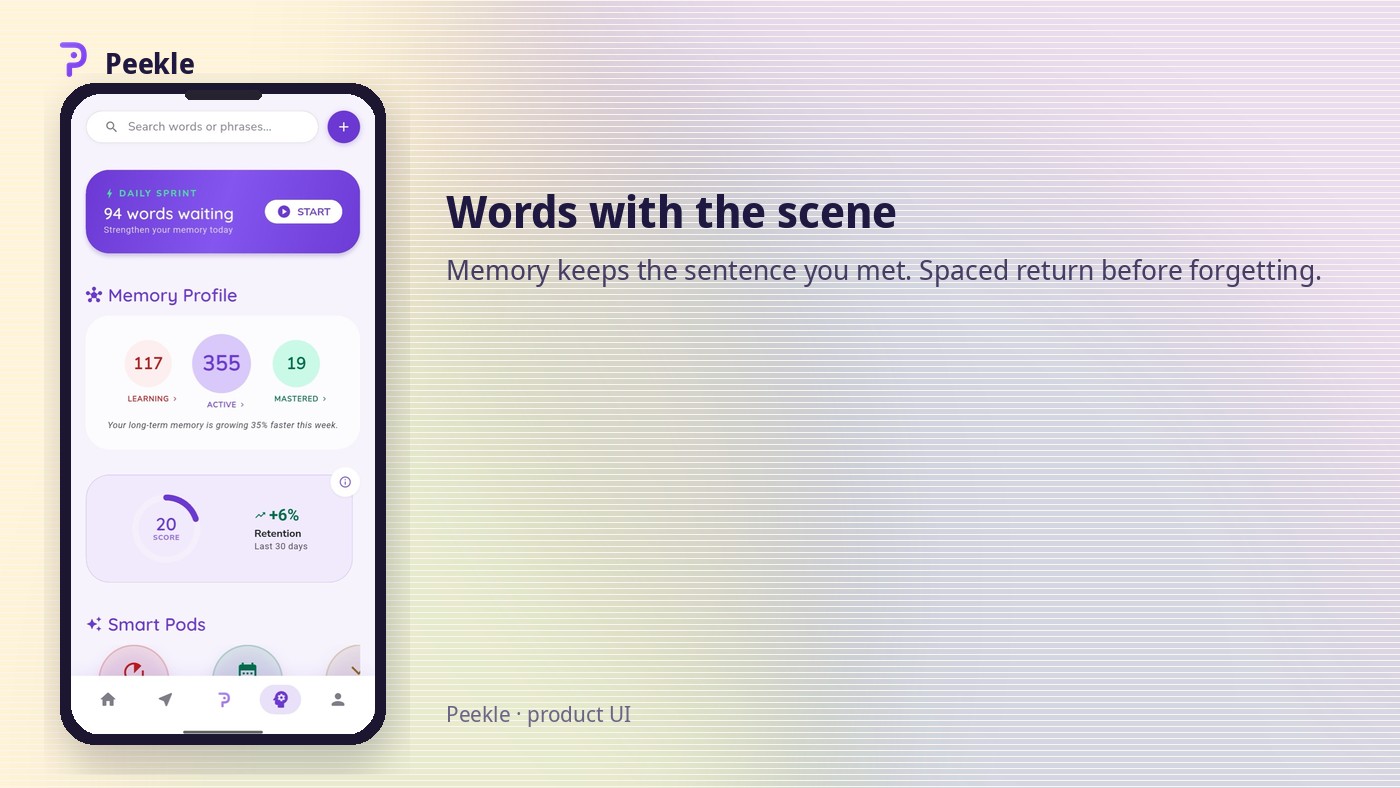
Words stick when you meet them doing something: a dog tag at the door, a café order, a late note to a colleague. The goal is concrete. The language has a job.
Afterward, those words can live in Memory with the sentence you met them in, not as orphans on a blank card, and come back before they slip. Spaced return matters; lonely lists are optional, not the front door.
You do not need hours. A few minutes of real situations, sized to the time you have, is enough to practice retrieving, not only recognizing.
Free, and better with other people
Peekle’s core path is free: short adventures, Focus for your day, Memory, and room to explore or share what you make. Plus is optional extras, not the product.
Learning also grows when you are around other people who care about the same craft: publishing an adventure, following a creator, rating what helped. Community is part of the design, not an afterthought.
Try the harder move
Next time a lesson offers you four options, notice how easy the tap feels. Then ask: could I retrieve that line with nothing on the screen?
If the answer is no, that is not failure. That is the practice you still need: active recall, honest help when you need it, and memory tied to moments that matter.
Get the thing done. Remember it. Come back tomorrow.
Related: a little hard on purpose · knowing a language isn’t the same as speaking it.