
Something is already on your calendar. Dinner with your partner’s parents. A doctor visit where you need to explain a symptom in English. An interview that is not in your strongest language. A landlord message you keep postponing.
Generic vocabulary lists do not know that week. A random unit on “food” is not the same as the specific dinner you will walk into on Saturday. Serious learners feel the gap: they study, then freeze when the real moment arrives.
Make it yours is Peekle’s answer to that gap. You describe the situation. Peekle turns it into a short, finishable adventure you can rehearse before the day comes.
The calendar is the better syllabus
Most courses follow a fixed sequence. Your life does not. The language you need next is often tied to a date, a place, and a job to finish: introduce yourself cleanly, order without panic, explain pain, ask one clear question at the end of an interview.
That is not a fluency fantasy. It is a concrete can-do. CEFR-style goals work the same way: what you will be able to do in a situation, not how many words you have seen.
When practice mirrors the moment ahead, retrieval has a reason. You are not collecting phrases in case they might matter someday. You are preparing the lines you will actually need.
Describe it. Play it. Keep the words warm.
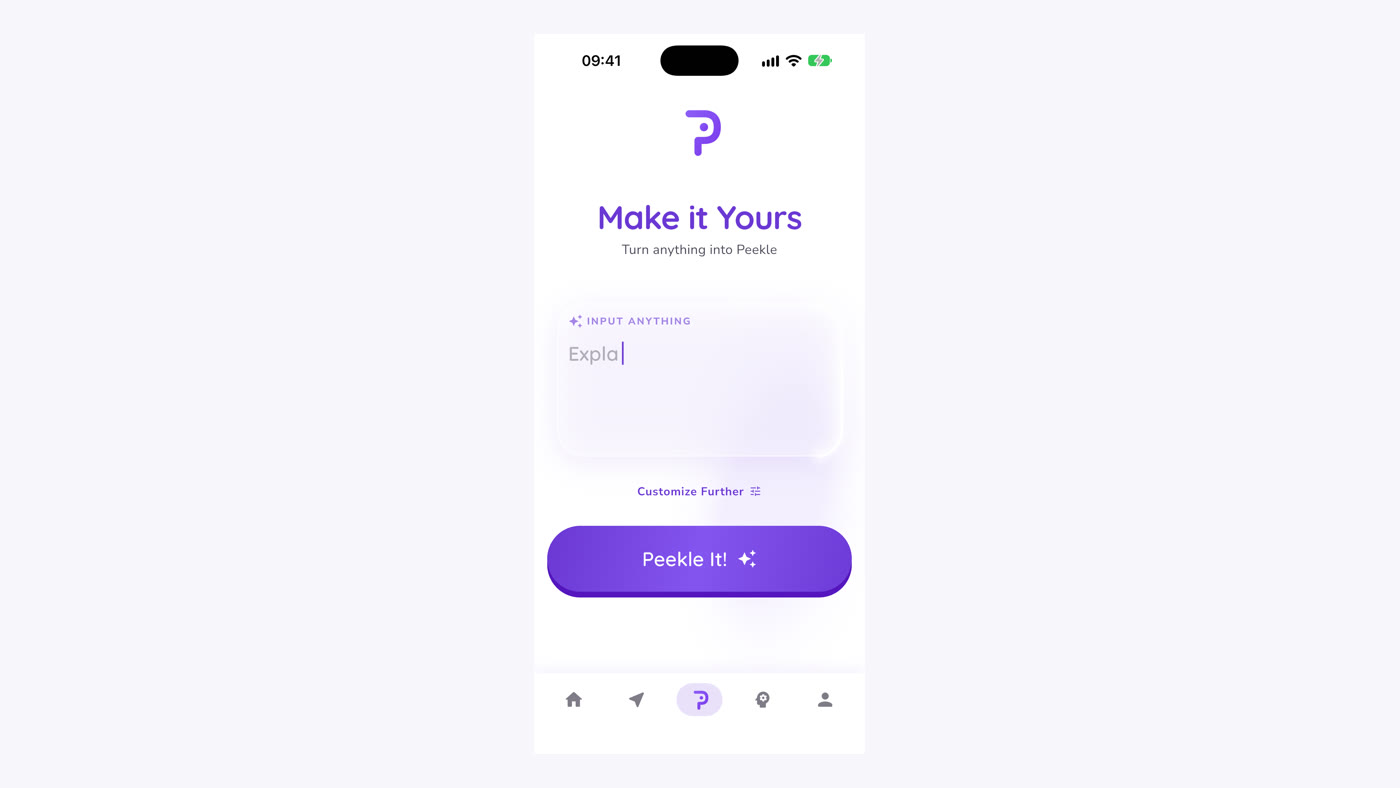
In Peekle you open Make it yours, write what is coming up in plain language, and generate a structured adventure: a goal, scenes, and help when you get stuck. It is not an open chat tutor. It is a finishable practice run for that moment.
You can keep it private. You can publish later if you want peers to find it. The core path is free.
After you play, useful words can land in Memory with the sentence and scene you met them in, then return before they slip. Spaced return keeps the path warm without turning the product into streak theater. For why that retrieval effort matters, see why remembering beats recognizing.
Dinner, doctor, interview: same pattern
The pattern is simple:
- Name the upcoming situation in one or two sentences.
- Play the short adventure: understand the scene, produce your lines when it is your turn.
- Peek for honest help if you stall, then write the line yourself.
- Come back once or twice before the real day.
Examples that land for working adults and travelers: dinner with the in-laws, explaining a symptom at the clinic, answering “tell me about a challenge” in an interview. Same idea whether you are building Turkish, Spanish, German, or English. The situation is yours; the desk just turns it into practice.
A little productive struggle helps the lines stick. Soft drills that never ask you to produce a reply feel kind and fade fast. More on that craft: a little hard on purpose.
Quiet desks still rehearse real life
You do not need a loud circle of strangers to prepare. Reading the scene, writing the reply, and understanding what is asked of you are real skills. If speaking feels early, you can still rehearse knowing and writing first. Peekle is not a speaking or pronunciation coach; text-to-speech lets you hear lines, and speech is not graded.
More on that door: knowing a language isn’t the same as speaking it.
Practice the week you actually have
Next time a course unit feels disconnected from your calendar, ask what is coming up that needs language. Describe that. Turn it into a short adventure. Rehearse once while the stakes are still low.
Get the moment ready. Let the effort count. Walk into the day with lines you have already reached for.